
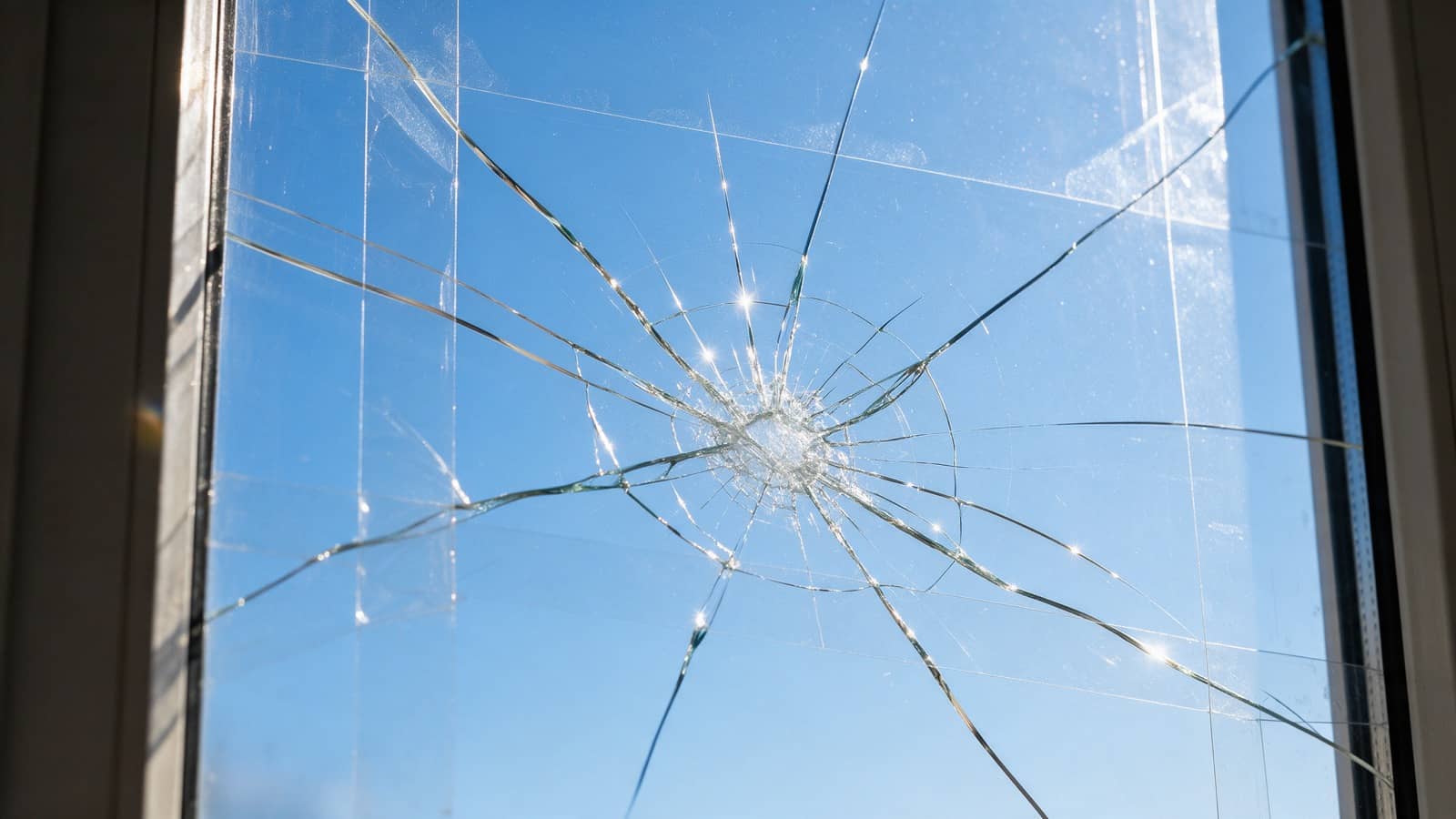
Ordinary glass shatters into sharp, scattered fragments on impact — from a break-in attempt, a storm-driven object, an accidental impact, or a blast event. Safety and security film is a thick, reinforced polyester layer applied directly to existing glass, engineered so that when the glass breaks, the film holds the fragments together in place rather than letting them scatter.
What safety and security film actually does
The film doesn't make glass unbreakable — it changes what happens after it breaks. A conventional pane shatters into loose, sharp shards that scatter and fall. Glass with security film applied cracks but the fragments stay bonded to the film, holding roughly in place instead of raining down or flying inward. That difference is the entire point: it turns a shattering event from an immediate scattering hazard into a contained one.
Why buildings install it
Forced-entry resistance. A significant share of break-ins start with breaking a ground-floor window or door glass panel. Security film makes that far harder and slower — the glass cracks on impact but the film holds it together, resisting the follow-through needed to actually clear an opening, which buys time and often discourages the attempt entirely.
Storm and impact protection. In storm-prone areas, wind-driven debris is one of the most common causes of broken glass and subsequent structural damage once wind and rain get inside a building. Security film keeps broken glass in place and helps preserve the building envelope even after the glass itself has cracked.
Reduced injury risk. In any glass-breaking event — accidental impact, a break-in, severe weather — the scattering shards from unprotected glass are a major injury hazard. Film that holds glass together in place substantially reduces that risk for anyone nearby.
Everyday accidental impact. Beyond storms and break-ins, security film also holds up in the more mundane cases — an accidental impact from equipment, furniture, or foot traffic near glass partitions and storefronts.
Where it's used
Ground-floor storefronts and entryways, schools and public buildings, data centers and other security-sensitive facilities, and homes in storm-prone regions are the most common applications — anywhere the consequences of shattered glass matter beyond just the cost of replacing the pane.
Installed on your existing glass
Like Aztek's other architectural films, security film is applied directly to glass you already have — no replacement, and installation is designed to minimize disruption to an occupied building.
Film thickness and what it means
Security films come in a range of thicknesses, and thickness is the main variable that determines how much force the film-and-glass combination can withstand before actually failing. A thin film adds meaningful protection against everyday accidental impact; heavier-gauge films, sometimes combined with reinforced framing systems that anchor the film to the window frame rather than just the glass, are used where forced-entry resistance is the primary goal. Aztek's certified installers assess the actual risk profile of the space — a ground-floor retail entry has different needs than a data center — before recommending a specific thickness and installation method.
What installation involves
Like Aztek's other architectural films, security film installation starts with a thorough cleaning of the glass, followed by precision cutting to the exact pane dimensions. For higher-security applications, installers may also apply a mechanical attachment system around the frame edge, which is what allows the film to resist being pried loose during a forced-entry attempt rather than simply holding the glass together in the middle of the pane. Installation is typically scheduled to minimize disruption to an occupied building.
Maintaining security film
Security film requires the same light maintenance as Aztek's other window films — a soft cloth or squeegee and a non-ammonia glass cleaner, avoiding abrasive pads directly on the film surface. Because security film is often installed in high-traffic entryways, a regular cleaning routine also helps installers or facility staff spot any edge lifting or damage early, before it affects the film's performance.
Who should consider security film
Ground-floor retail and street-level offices facing forced-entry risk, schools and public buildings where occupant safety during any glass-breaking event is a priority, storm-prone regions where wind-driven debris is a recurring threat, and any facility where the cost of a shattered-glass event goes well beyond the price of the pane are all strong candidates. It's one of the few upgrades that pays off in an event you hope never happens, which is exactly why it's easy to deprioritize until it's needed.
Backed by our digital warranty
Every safety and security film installation is registered to Aztek's digital warranty system, giving you a verifiable record of exactly what was installed and when — the same system behind every Aztek service, from solar control to privacy film.