
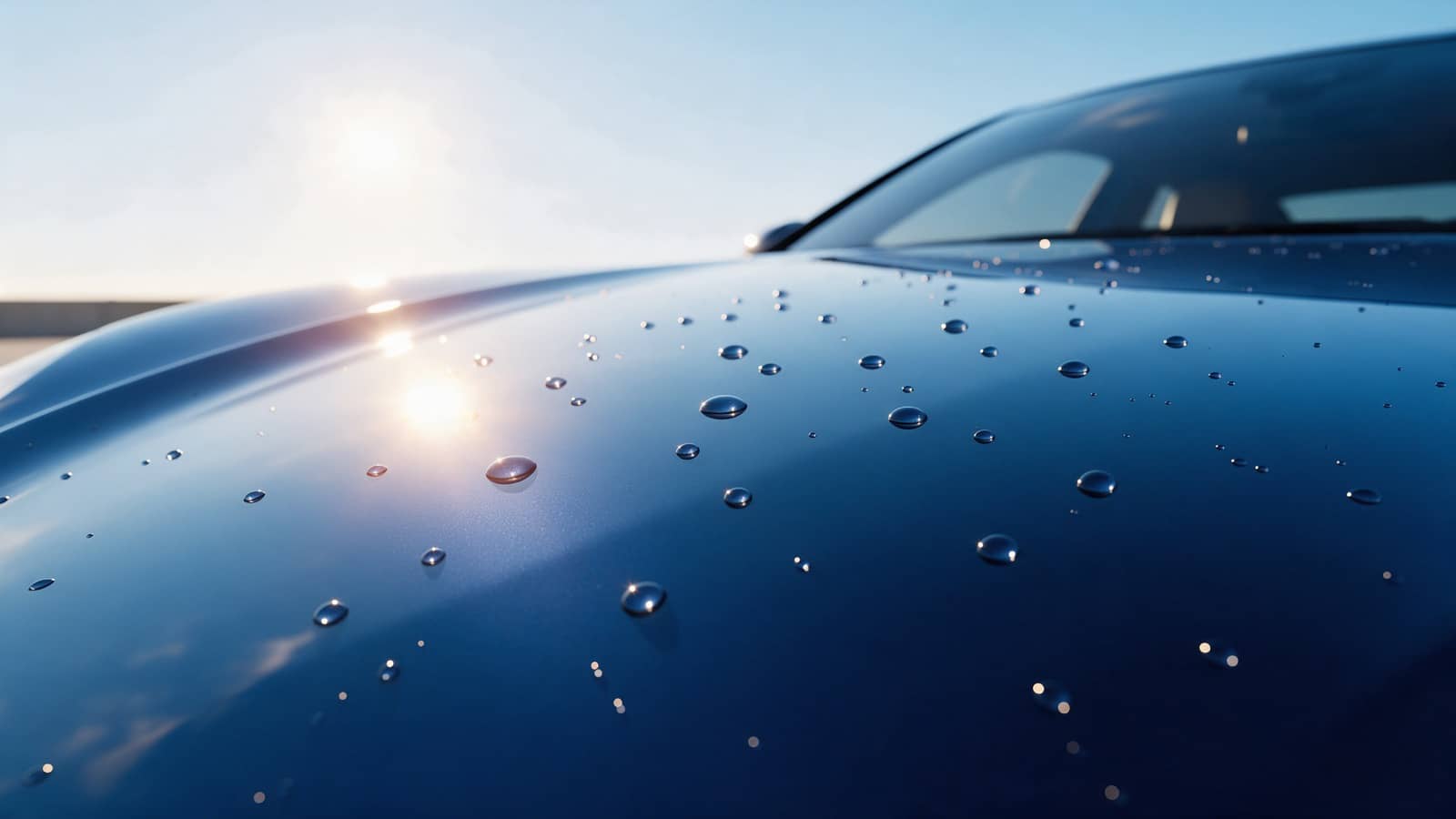
Ceramic coating is a liquid polymer, typically silicon dioxide (SiO2) based, that chemically bonds to your vehicle's paint, clear coat, or paint protection film. Once cured, it forms a hard, glass-like layer that sits on the surface — adding depth and gloss to the finish while making the surface significantly more resistant to the things that dull paint over time.
How ceramic coating protects your vehicle
Where a traditional wax sits on top of paint and wears off within weeks, a properly applied ceramic coating chemically bonds to the surface and lasts far longer. That bond is what gives ceramic coating its two signature properties: hydrophobicity and chemical resistance.
Hydrophobic surface. Water beads and rolls off a ceramic-coated surface instead of sheeting and clinging, taking dirt and grime with it. This is why ceramic-coated cars are visibly easier to keep clean — road film, dust, and light dirt rinse away with far less effort and less risk of swirl marks from scrubbing.
UV and chemical resistance. Ceramic coating adds a barrier against UV oxidation (the slow fading and dulling paint suffers from years of sun exposure), and against the acidic residue from bird droppings, tree sap, and industrial fallout that etch into unprotected clear coat if left too long.
Depth and gloss. Because the coating fills in microscopic imperfections in the clear coat, the finish underneath reads as deeper, wetter, and glossier than an uncoated equivalent — a visible difference, not just a protective one.
Ceramic coating and paint protection film work together
Ceramic coating and paint protection film solve different problems, and Aztek's certified installers frequently apply one over the other rather than treating them as competing choices. Paint protection film is a physical, self-healing barrier against chips and scratches; ceramic coating is a hard chemical seal against UV, chemical staining, and everyday grime, with the gloss and easy-clean benefits on top. Coating over PPF gives you both: impact protection underneath, chemical and UV resistance and enhanced gloss on the surface.
What to expect from installation
Ceramic coating installation starts with paint correction — polishing out existing swirl marks and light scratches, since the coating will lock in whatever condition the paint is in when it's applied. Aztek's certified installers assess the paint's condition first, correct it where needed, then apply the coating in a controlled environment so it cures properly.
Caring for a ceramic-coated vehicle
A ceramic coating doesn't eliminate the need to wash your car, but it does change how you should do it. Harsh detergents and automated brush washes can wear down the coating's hydrophobic properties faster than a gentler routine — a pH-neutral car shampoo and hand washing or a touchless wash will preserve the coating's performance far longer. Because dirt and grime rinse off more easily on a coated surface, washes also tend to be faster and less physically abrasive to the paint underneath, which is part of why the coating protects so well over time: less scrubbing means fewer opportunities to introduce new swirl marks.
How long ceramic coating lasts
Coating longevity depends on the specific product used, how the vehicle is driven and washed, and environmental exposure — a garage-kept car in a mild climate will hold its hydrophobic properties longer than one parked outdoors year-round in intense sun or road salt. What you'll typically notice first as a coating begins to wear is water beading less dramatically and dirt sheeting off less easily; that's a sign it's worth having your installer assess whether a maintenance top-up or reapplication makes sense, rather than waiting for the coating to fail completely.
Paint correction: the step that determines the result
It's worth being clear about what ceramic coating can and can't do to your paint's existing condition: it locks in whatever the surface looks like at the time of application. Swirl marks, light scratches, and oxidation that are present before coating will still be visible under a glossy, hydrophobic coating — they don't disappear, they're just sealed in. That's why Aztek's certified installers treat paint correction as a required first step rather than an optional upsell: multi-stage polishing removes as much of that existing damage as possible before the coating goes on, so the gloss and clarity you're paying for actually shows through.
Who ceramic coating is right for
Ceramic coating makes the most sense for owners who wash their car regularly and want that upkeep to be easier and more effective, and for anyone who wants their paint to look genuinely deeper and glossier, not just protected. It's less about solving a single problem the way PPF solves impact damage, and more about raising the baseline condition and appearance of the paint across the board — which is exactly why so many Aztek customers choose to run it as a finishing layer over PPF rather than picking one or the other.
A verifiable, digital record
Like every Aztek installation, ceramic coating work is registered to a digital record tied to your vehicle — so there's a clear, verifiable account of what was applied and when, callable up any time you need it.
Not sure whether ceramic coating, PPF, or both make sense for your vehicle? Our installer network can walk you through what your car actually needs.