
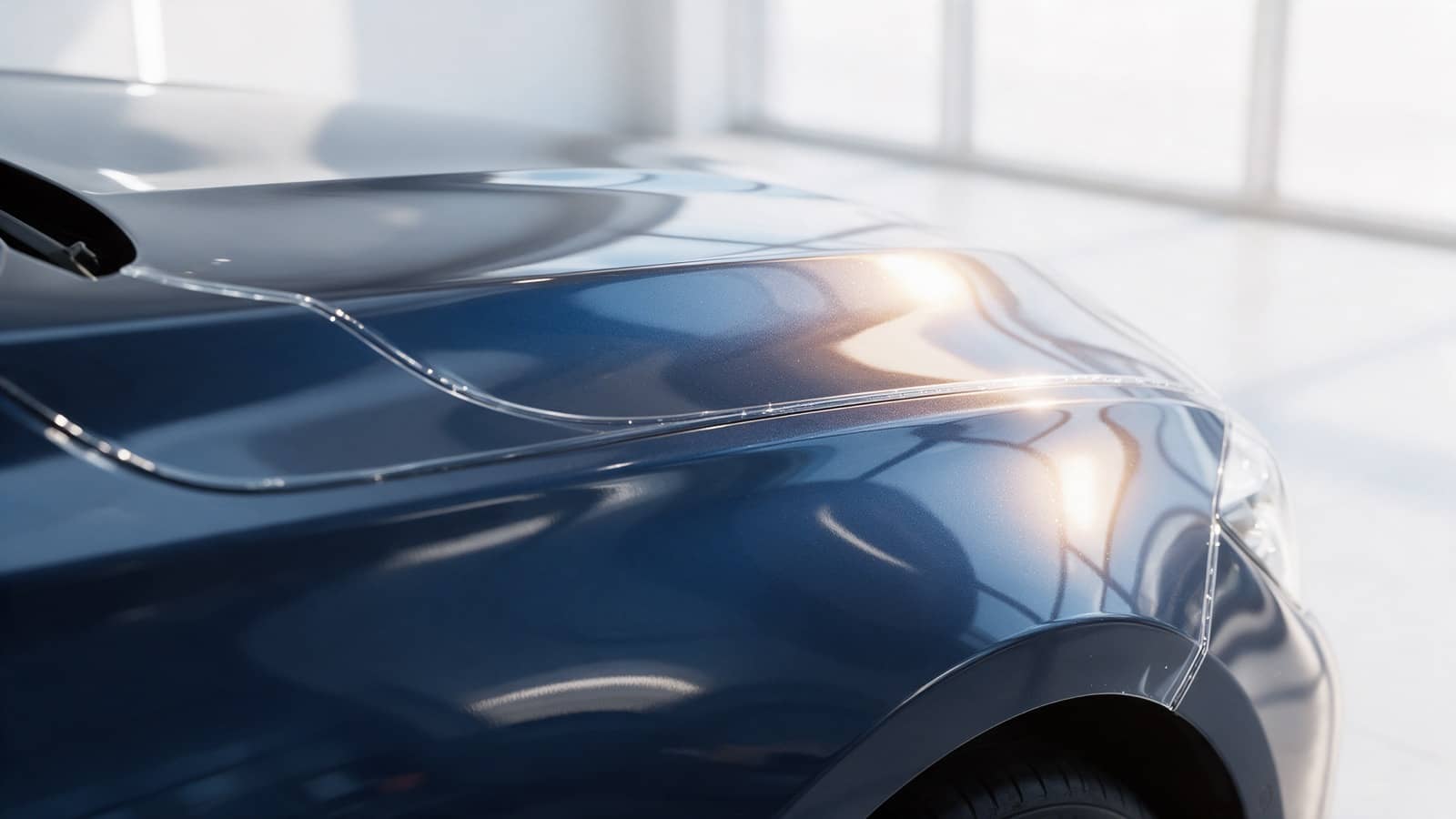
Paint protection film (PPF) is a clear, high-performance polyurethane layer applied directly over your vehicle's factory paint. Its job is simple: absorb the everyday damage your paint would otherwise take — stone chips on the highway, light scratches from careless parking, road grime, insect acid, and UV exposure — before any of it reaches the paint underneath.
Aztek's film uses a self-healing elastomeric top coat. Minor scratches and swirl marks disappear on their own under warmth: direct sun on a hot day, or even warm water from a hose, is usually enough to trigger the film's polymeric regeneration. Deeper marks that a normal clear coat would carry permanently often vanish entirely.
Why paint protection film matters
A factory clear coat is thin and, once damaged, stays damaged — the only fix is polishing it down (which thins it further) or a costly respray. PPF gives that same surface a sacrificial layer that takes the impact instead. For a new car, that means preserving factory paint and resale value from day one. For a car you already love, it means finally being able to stop worrying every time you pull into a gravel driveway or a crowded parking lot.
The film itself is optically clear and, properly installed, is designed to be invisible — it does not change your car's color or finish, only protects it. Aztek's high-tack, residue-free adhesive is built for permanent bonding, and the film is engineered to resist yellowing over time, so it looks the way it did on day one for years, not just months.
Precision installation, not a generic wrap
PPF is only as good as its installation. Aztek's certified installer network uses precision digital patterns cut specifically for each vehicle's body panels — not a generic template trimmed by hand — for a clean, factory-tight fit around curves, vents, and body lines, with no visible edges or lifting seams over time.
Where it's applied
Full-front, partial-front, and full-vehicle coverage are all common depending on how much protection you want and where your car actually takes the most abuse — typically the front bumper, hood, mirrors, and rocker panels take the brunt of road debris, while a full wrap protects every painted surface.
What to expect on installation day
A typical PPF installation starts with a thorough wash and decontamination of the panels being covered — any dirt, tar, or embedded contaminant trapped under the film becomes a permanent flaw, so this step matters as much as the film itself. Your installer then positions the pre-cut, vehicle-specific film section, works out any air or moisture using specialized tools, and finishes the edges so they sit flush against body lines rather than lifting at a visible seam. Depending on coverage (partial-front versus full-vehicle), installation typically takes anywhere from a few hours to a full day.
Caring for a PPF-protected vehicle
PPF is low-maintenance, but a few habits extend its life. Avoid automated brush car washes in the first couple of weeks while the adhesive fully cures — hand washing or a touchless wash is safer during that window. After that, PPF actually simplifies washing, since the film's smoother surface sheds dirt more easily than bare clear coat. Avoid picking at any small air pocket that appears near an edge; if one shows up, your installer can address it properly rather than risking a tear by handling it yourself. Regular washing remains the single best thing you can do — trapped grime left to sit is what eventually dulls any protective surface, film or paint.
How long paint protection film lasts
Because the film itself is a sacrificial layer, its lifespan depends heavily on how much abuse it actually absorbs — a car driven mostly on clean city roads will show far less wear than one regularly driven on gravel or in heavy highway traffic. What keeps Aztek's film performing well over time is the combination of the non-yellowing formula, the self-healing top coat handling routine light damage, and the curl-stop edge technology preventing the most common failure point (lifting edges) from ever starting.
Is paint protection film worth it?
For a new or recently purchased vehicle, PPF is often the single highest-value protective step you can take, since it starts preserving factory paint from the first drive rather than trying to undo damage that's already happened. For an older vehicle, it's just as relevant if the paint is already in good condition and you want to keep it that way, or ahead of a sale where a chip-free, well-preserved finish makes a real difference in resale value. The honest answer depends less on the age of the car and more on how much you value not having to think about the next chip or scratch.
Backed by a real warranty
Every Aztek PPF installation is backed by our digital warranty system — registered to your vehicle at the time of installation, verifiable online at any time, and transferable if you sell the car. No paperwork to lose, no disputes about what's covered: your installer and Aztek both have the same record.
If you're deciding between paint protection film and ceramic coating, or wondering whether you need both, our ceramic coating page breaks down how the two work together — many Aztek customers run ceramic coating over PPF for the best of both: impact protection underneath, and a hydrophobic, high-gloss top layer.