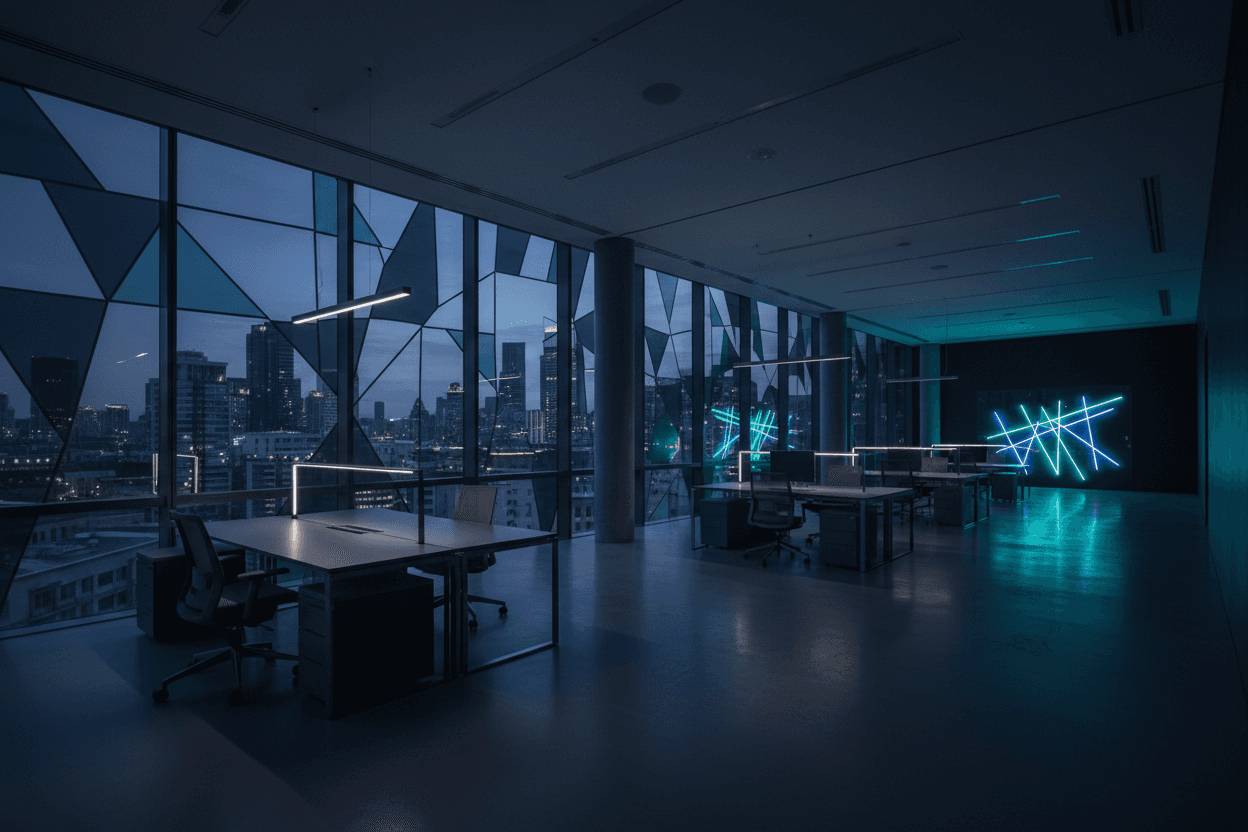

Vinyl and film applications on commercial buildings aren't limited to solar control on glass — a growing share of the category covers exterior branding, decorative surfaces, and protective films for non-glass materials, and the three often get bundled into one project.
Branded window graphics vs. solar film — different products, same glass
A storefront window can carry a printed or cut-vinyl graphic (logos, promotional messaging, frosted privacy bands) as a separate layer from a solar control or safety film underneath. These aren't competing products — a building commonly runs a base solar control film for year-round heat/UV performance, with removable branded graphics applied over or alongside it for a campaign or seasonal promotion. Knowing this upfront avoids the common mistake of assuming one film has to do both jobs.
Protective films beyond glass
Exterior-grade films exist for surfaces beyond windows — metal cladding, painted signage, and entryway surfaces that see heavy foot traffic or weather exposure can be protected with a clear or matte protective film the same way a vehicle's paint is, extending the life of a fresh paint job or a new sign face against UV fading and surface abrasion.
Why exterior branding needs UV-stable materials specifically
A building's exterior graphics face years of direct, unshaded sun exposure — far more punishing than most interior or vehicle applications. Print and vinyl grades that aren't UV-stable will visibly fade or shift color within a year or two outdoors, even if the same material would hold up fine on an interior surface. This is the single most common reason a building's branding looks tired years before it should — the material spec, not the design.
Planning a combined project
When solar control film, safety film, and exterior branding are all part of the same building project, sequencing matters: base performance films (solar control, safety) typically go down first as the long-term layer, with branded or seasonal graphics applied afterward so they can be swapped or refreshed independently without disturbing the underlying film.
The bottom line
A building's glass and exterior surfaces can carry protection and branding at the same time — they just need to be treated as separate, compatible layers rather than one product trying to do both jobs.