
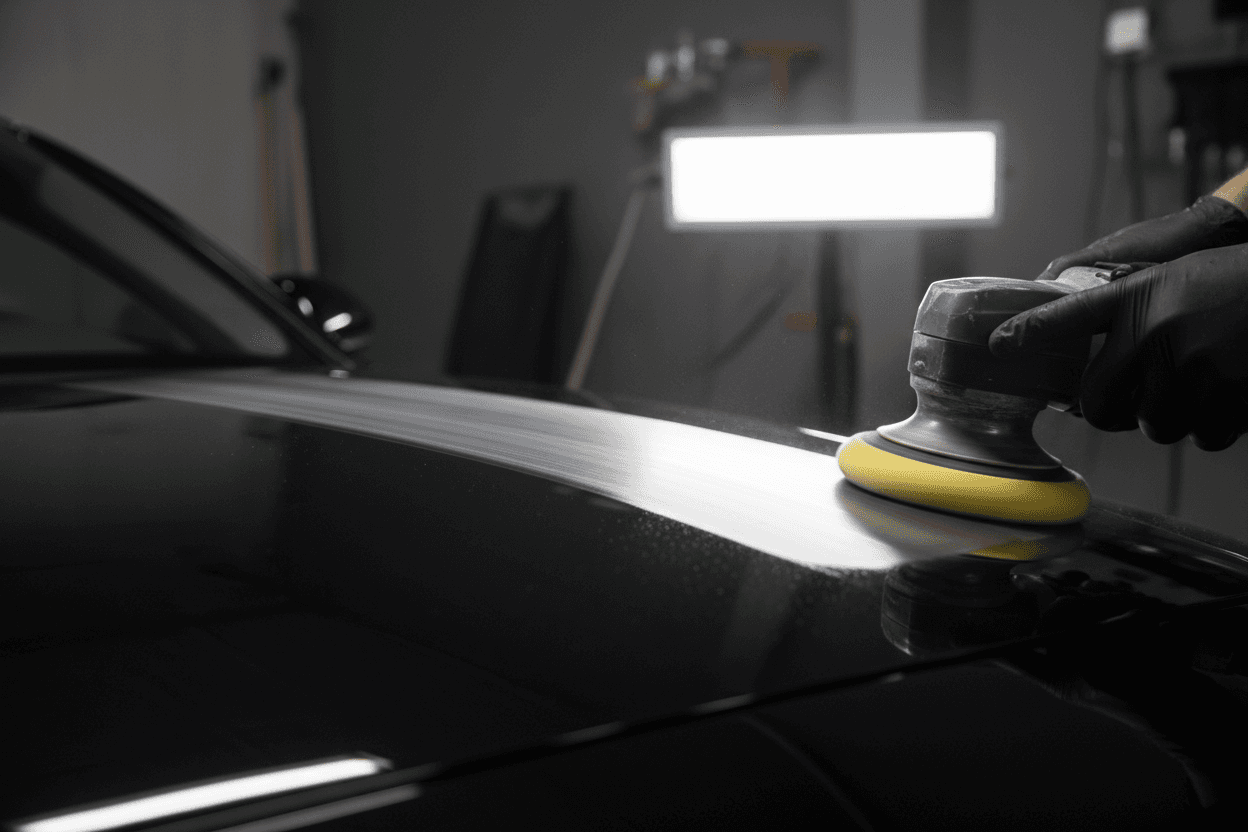
A ceramic coating or PPF application does one thing extremely well: it locks in whatever is underneath it. That's exactly why skipping paint correction before applying either is one of the most common — and most permanent — mistakes in vehicle protection.
What correction actually removes
Swirl marks, light scratches, water spots, and oxidation all live in the clear coat's top microns. A proper multi-stage machine polish levels that surface by removing a small, controlled amount of clear coat, cutting below the depth of those imperfections. It's a genuinely corrective process, not a cleaning step — which is why it needs to happen before any protective layer, never after.
Why coating over imperfections locks them in
Both ceramic coatings and PPF are optically clear and conform tightly to whatever surface they're applied over. They don't fill or hide swirl marks the way a wax or a glaze temporarily can — they preserve the surface exactly as it was at the moment of application, imperfections included. Once either is applied, those swirl marks aren't just visible under the same light as before; the surface is now sealed, so removing them later means removing the coating or film first.
When correction isn't necessary
A genuinely new vehicle with a clean factory finish, or a repainted panel fresh from a body shop, may not need correction — there's nothing to remove yet. The judgment call is whether the paint has actually accumulated wear, not the vehicle's age on paper. A well-maintained older vehicle that's always been hand-washed may need less correction than a newer one that's been through years of automated car washes.
The honest trade-off
Correction removes clear coat, and clear coat is finite. The goal of a good correction isn't maximum gloss at any cost — it's the least aggressive process that achieves a genuinely swirl-free surface, leaving as much clear coat as possible for the years of protection ahead.
The bottom line
If the plan is a coating or PPF that's meant to last years, the prep work matters as much as the product. A rushed or skipped correction step doesn't just show through the finish — it gets sealed under it.