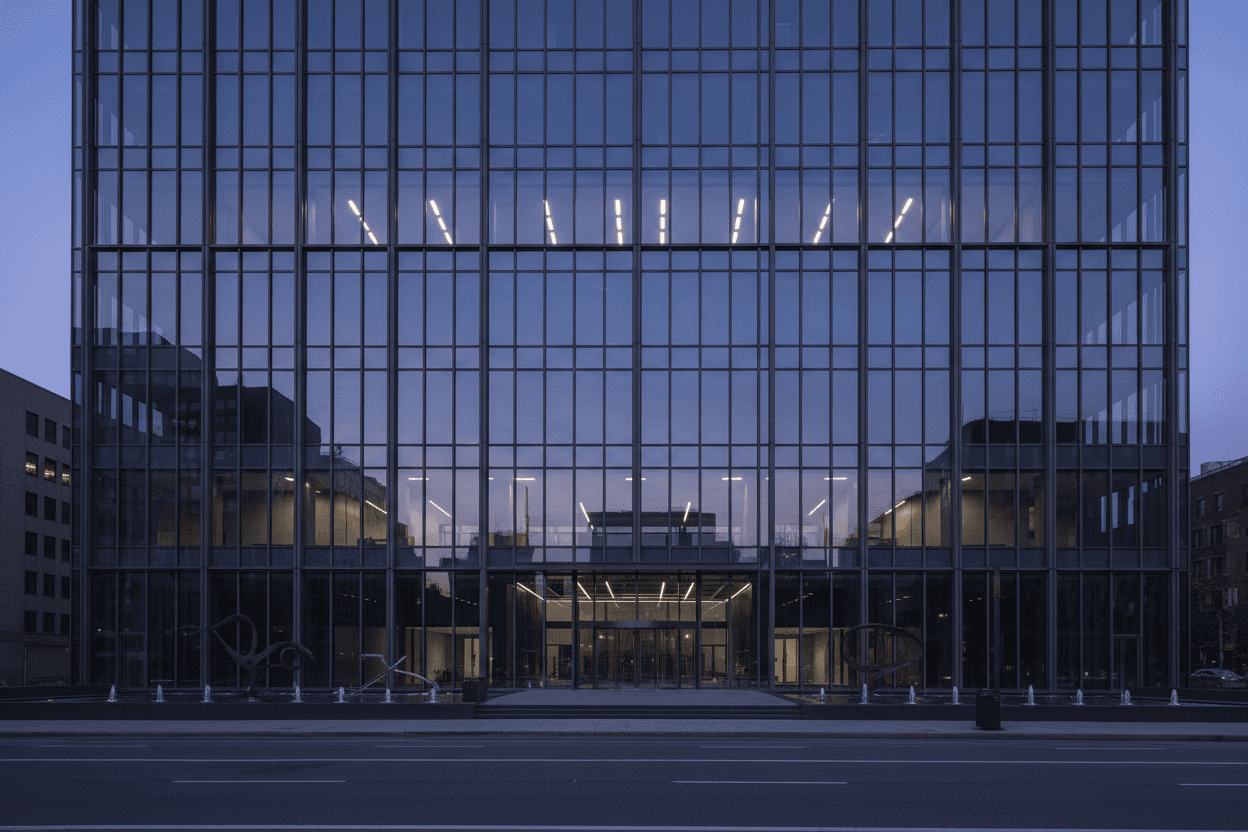
Commercial glass has a problem: it's the least energy-efficient part of most buildings. A single pane of untreated glass can be responsible for a large share of a building's total heat gain in summer and heat loss in winter — which is exactly the gap architectural window film is built to close.
What "low-E" actually means
Low-emissivity (low-E) film works by applying an ultra-thin metallic or ceramic coating that reflects infrared radiation while letting visible light pass through largely unaffected. The coating doesn't block light the way a tinted film does — it selectively rejects the heat-carrying wavelengths outside the visible spectrum. That's the technical difference between a film that makes a room dim and one that just makes it cooler.
Solar control vs. UV protection — two different jobs
These terms get used interchangeably, but they address separate problems. Solar control film is rated by how much total solar heat it rejects (its Solar Heat Gain Coefficient), which drives cooling-load reduction. UV protection is a separate rating — most quality films block upward of 99% of UV-A and UV-B radiation regardless of their heat-rejection performance, because UV blocking depends on the film's base layer, not its reflective coating. A film can have excellent UV protection and modest heat rejection, or vice versa — worth asking about both numbers separately when comparing products.
Why this matters beyond the energy bill
UV exposure is the primary cause of fading in carpets, furniture, artwork, and flooring near glazing. A building that installs film purely to cut cooling costs often finds the interior-preservation benefit is just as valuable — upholstery and finishes that would fade within a few years hold their color for much longer behind UV-blocking glass.
What to check before specifying a film
Visible Light Transmission (VLT), Solar Heat Gain Coefficient (SHGC), and UV rejection percentage are the three numbers that actually describe a film's performance — not marketing terms like "advanced" or "premium." Ask for all three before comparing options, and confirm whether the rating applies to the film alone or the film-plus-glass assembly, since those numbers aren't interchangeable.
The bottom line
Architectural film is one of the few retrofits that pays for itself twice — once in reduced cooling costs, and again in protecting everything sunlight would otherwise degrade indoors. The films that deliver on both do it with real coating science, not just a darker tint.