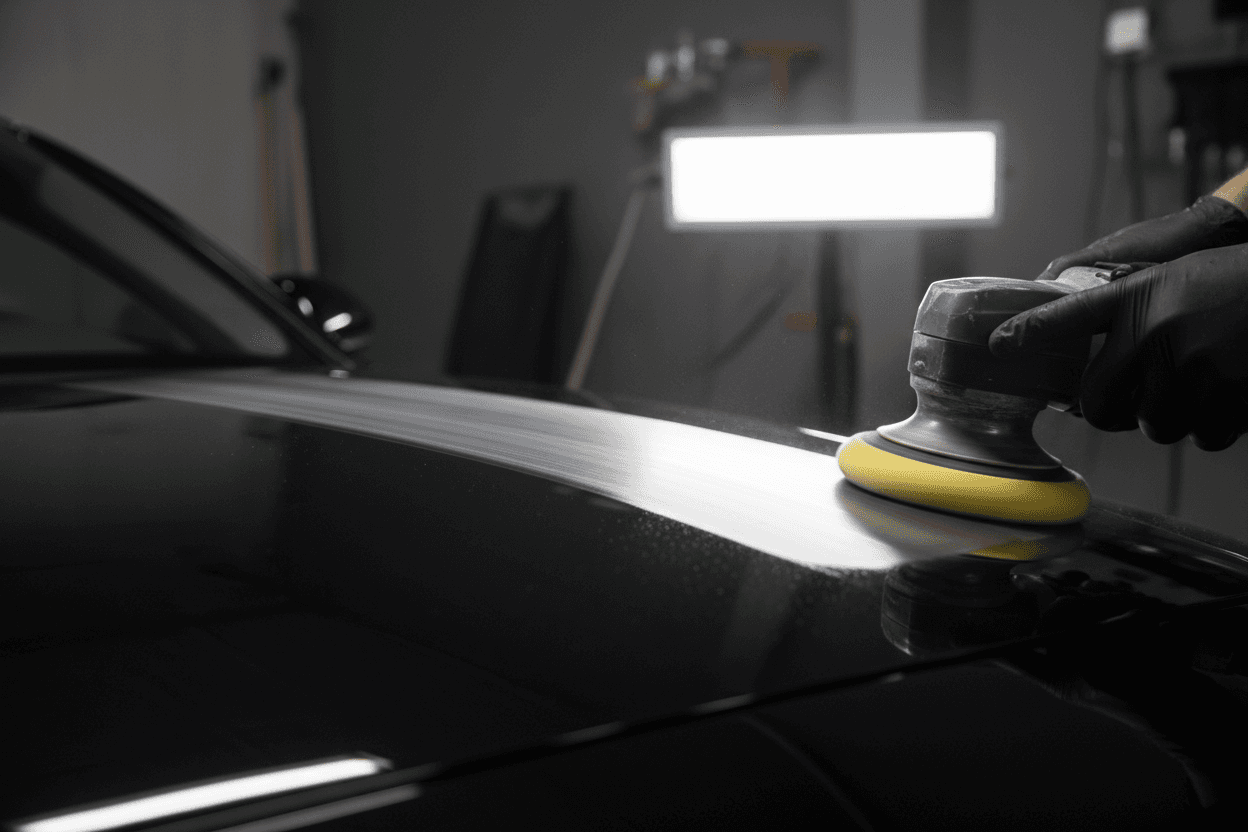
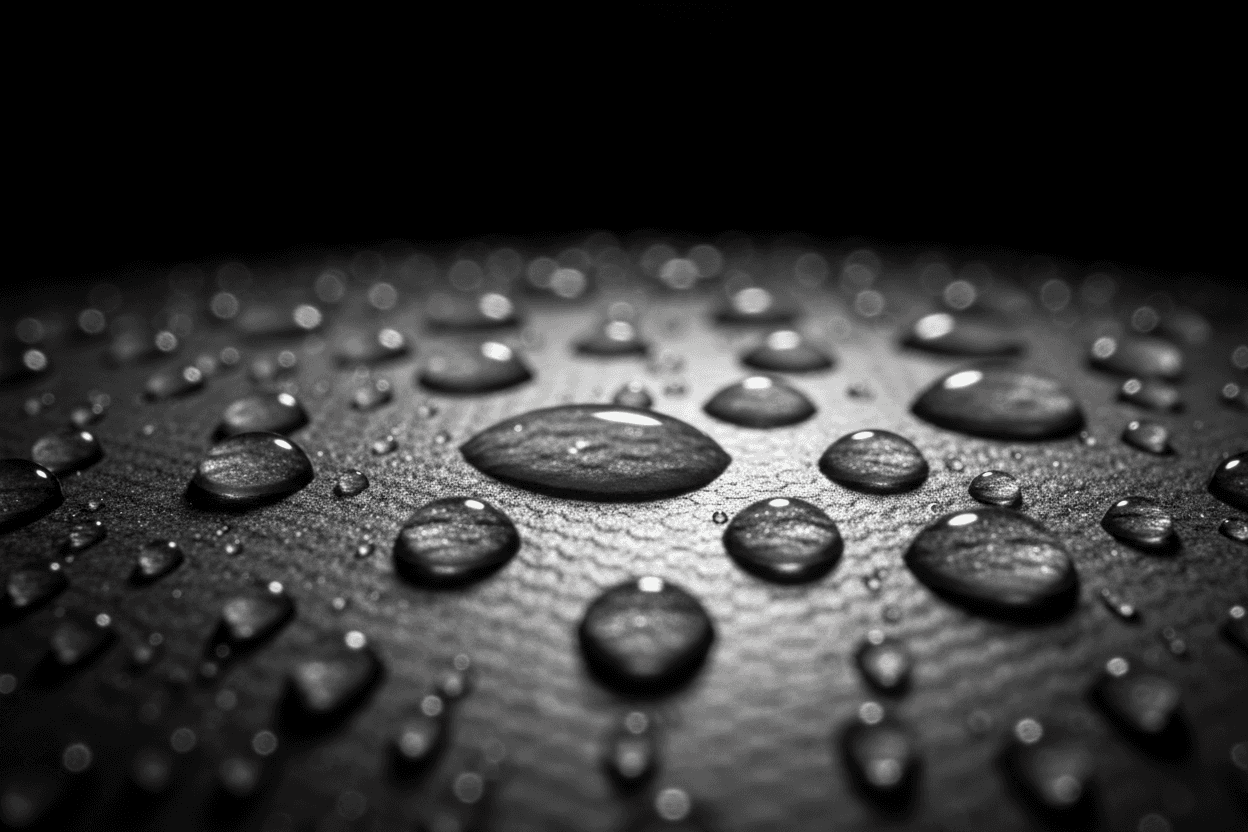
"Nano-coating" gets used as a catch-all marketing term, but the hydrophobic behavior it usually refers to — water beading up and rolling off a surface instead of sheeting or pooling — is real, measurable surface chemistry, not a gimmick. Here's what's actually happening and where it fits alongside PPF and traditional ceramic coatings.
What makes a surface hydrophobic
Hydrophobic behavior comes down to surface energy. A coating built from silicon- or fluoropolymer-based nanoparticles creates an extremely low-surface-energy layer, which means water can't spread out and wet the surface the way it does on bare paint or glass — instead, it draws into tight beads that roll off at the slightest angle or airflow, taking loose dirt and dust with it. That self-cleaning effect is the practical, day-to-day benefit most owners actually notice.
How this differs from a standard ceramic coating
Most ceramic coatings already have hydrophobic properties as a byproduct of their SiO2 chemistry — nano-coatings push that specific property further, often at the cost of some of the harder cross-linked durability a dedicated ceramic coating provides. In practice, many premium coatings are formulated as a hybrid: a durable ceramic base layer for hardness and UV resistance, topped with a nano-infused layer specifically to maximize water-beading and self-cleaning behavior.
Where it's genuinely useful beyond looks
Beyond the visual appeal of beading water, reduced surface wetting means less mineral deposit build-up from evaporating water spots, less time spent hand-drying after a wash, and — on glass specifically — measurably improved visibility in rain, which is why nano-hydrophobic treatments are also sold as a standalone product for windshields, independent of any paint protection system.
What it doesn't replace
A hydrophobic top layer is not a substitute for the impact resistance of PPF or the hard cross-linked durability of a full ceramic coating system — it's a finishing layer that improves how a protected (or even unprotected) surface behaves with water and light dirt. It doesn't stop a stone chip and it wears faster than the protective layer beneath it, which is why it's typically offered as an add-on rather than a stand-alone protection product for vehicles.
The bottom line
Nano-hydrophobic technology is real chemistry doing a specific, useful job — repelling water and light contamination — best understood as a complement to PPF and ceramic coatings, not a replacement for either.