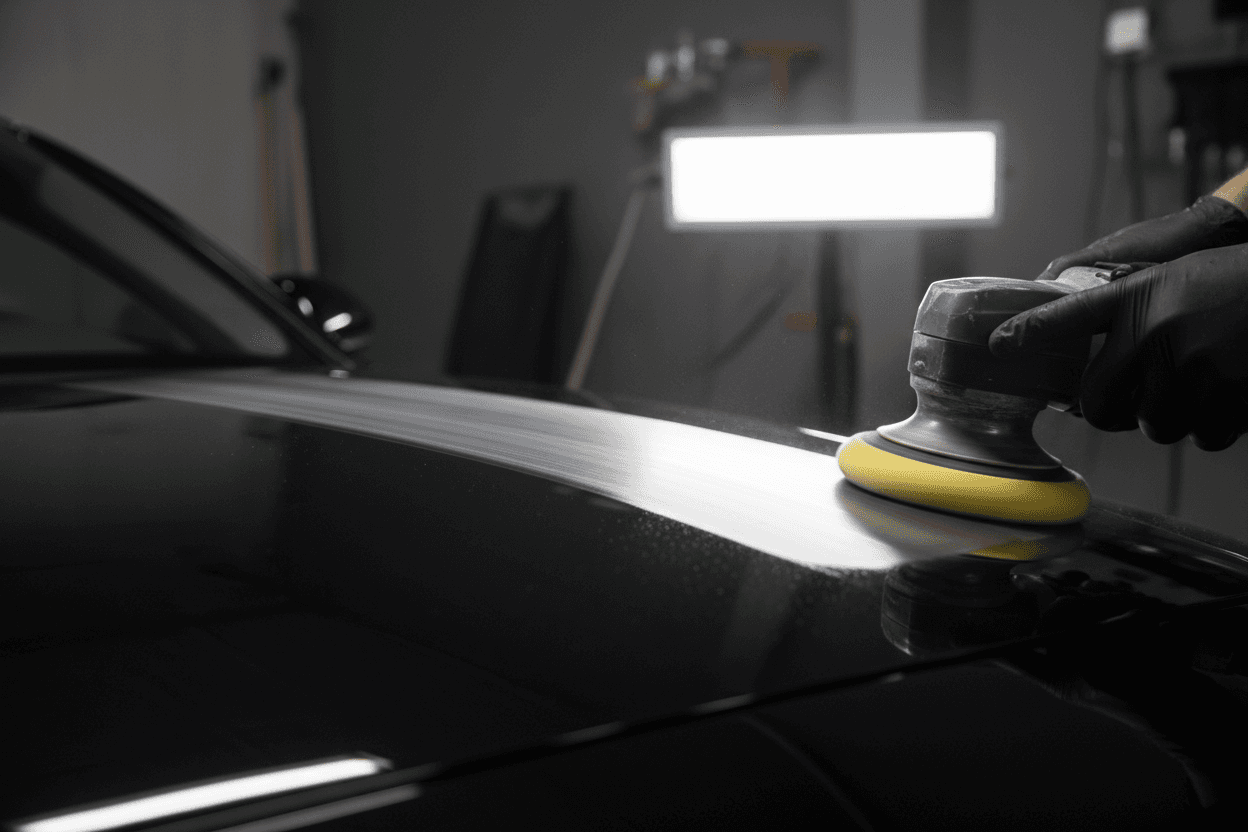
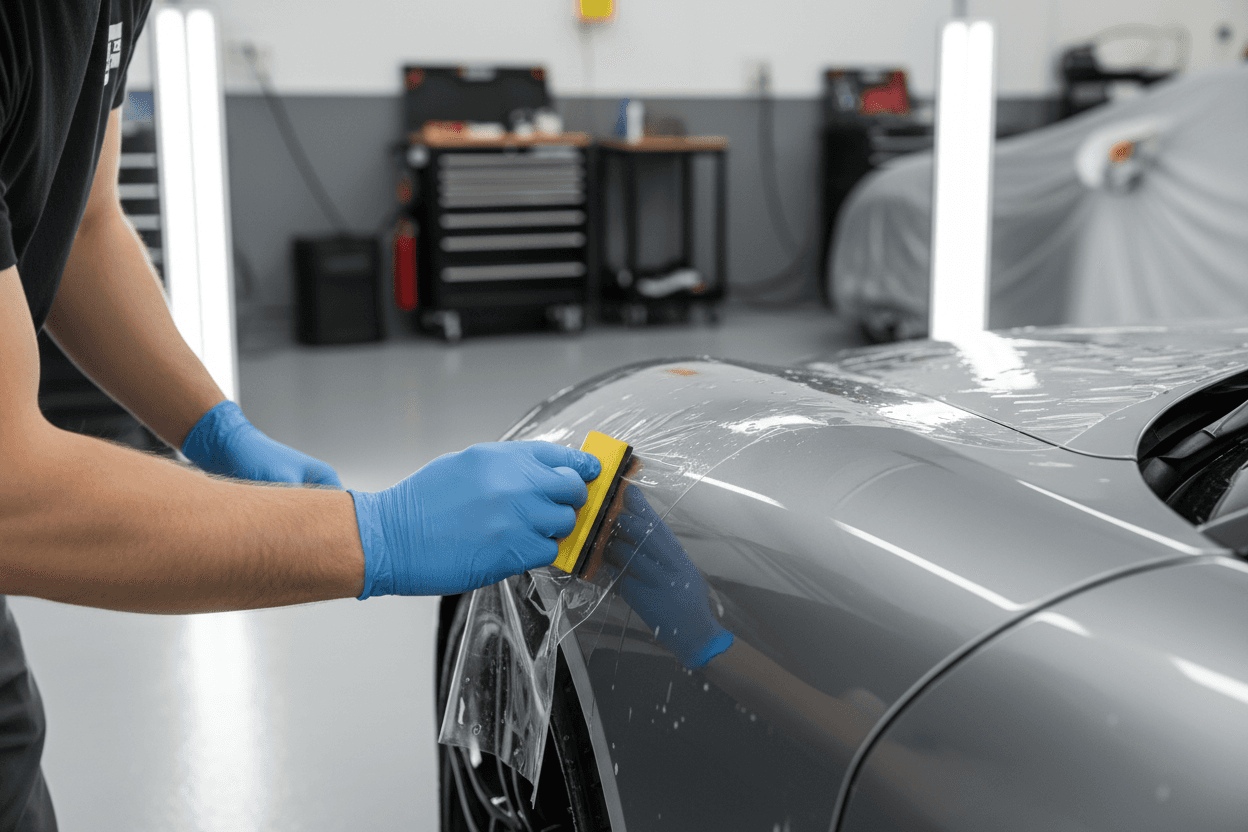
Paint protection film is only as good as its installation. The same film, installed well versus installed poorly, can be the difference between a decade of invisible protection and a visible failure point within the first year. Here's what actually separates a clean install from a problem one.
Edge wrapping vs. edge trimming
The most common failure point on any PPF install is the edge — where the film terminates. A properly wrapped edge tucks the film slightly around a panel's return (the inside lip where a body panel folds back), so there's no exposed raw edge for airborne grit or a fingernail to catch and start lifting. A trimmed edge, left flat on the visible surface, is more prone to catching and peeling over time, particularly on high-airflow areas like a hood's leading edge or side mirrors. Ask your installer which approach they use on a given panel and why — a skilled installer will have a reason, not just a habit.
Seams: fewer is better, but not at any cost
Pre-cut, vehicle-specific film patterns are designed to minimize seams on complex curves, but some panels genuinely need a seam to avoid stretching the film beyond its safe tolerance. A stretched-too-far film thins out, loses clarity, and is more prone to lifting at stress points. A visible seam placed intentionally in a low-sightline location is a better outcome than a single sheet of film stretched thin trying to avoid one.
What causes bubbles, and which ones matter
Small bubbles that disappear within the first 48–72 hours are normal — they're trapped installation fluid working its way out through the film as it cures, not a defect. A bubble that's still present after a week, especially one with a defined edge or a piece of visible debris inside it, is a real installation issue and should be addressed by the installer rather than left alone.
What to check right after installation
Run a hand lightly along every edge — panel returns, mirror caps, door handles — feeling for any lifting or a rough transition where the film meets bare paint. Check under strong direct light (not just ambient garage lighting) for any trapped debris or uneven texture across large flat panels like the hood and roof.
The bottom line
A great PPF job is invisible — no edges to catch, no seams in obvious sightlines, no bubbles after the first few days. If any of those show up, it's a fair question to bring back to the installer, not something to just live with.