Paint protection film (PPF) has earned a reputation for "self-healing" — but what does that actually mean, and where's the line between real material science and marketing?
How self-healing PPF actually works
Aztek's PPF is manufactured with a topcoat that behaves elastically under heat: its polymer chains temporarily loosen and flow, letting the film's surface reflow back to flat. That's the entire mechanism — no chemical reaction, no coating being "used up," just heat-driven elasticity.
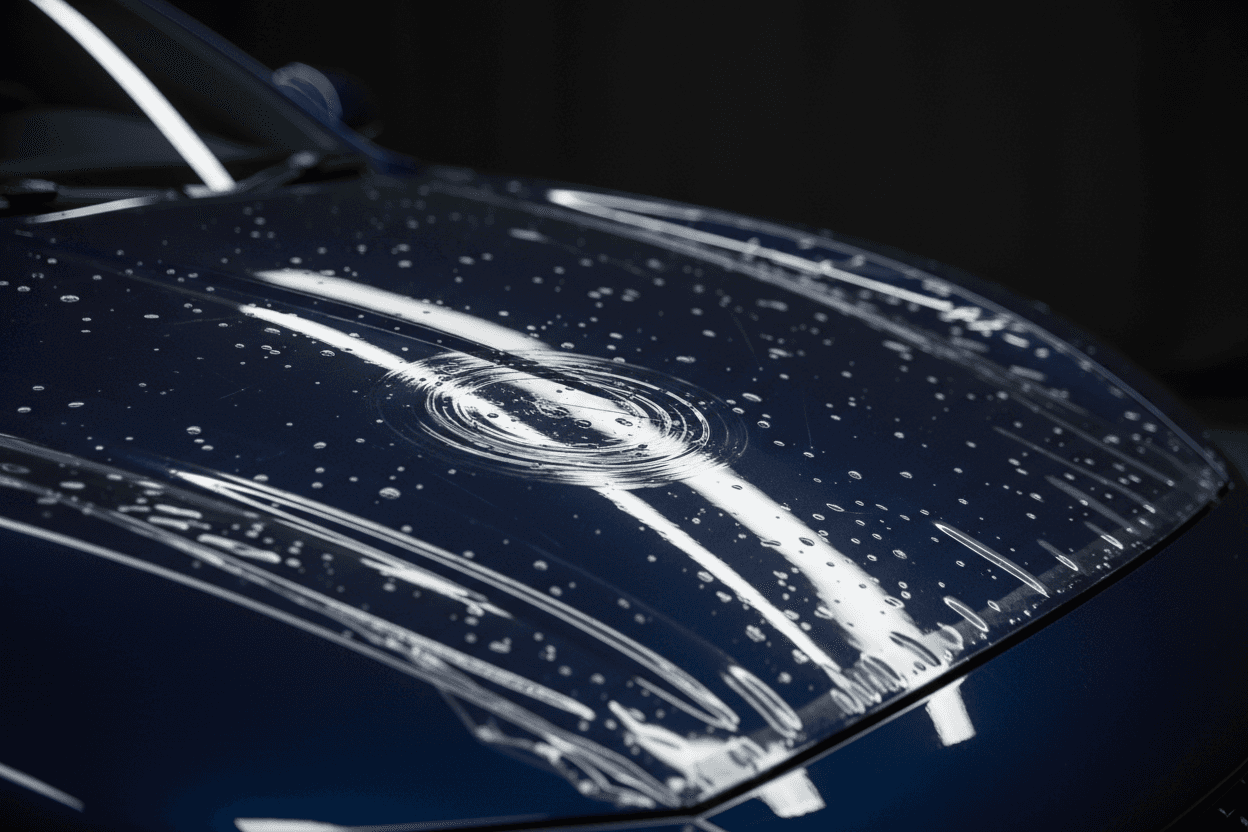
In practice, that means minor scratches and swirl marks heal spontaneously in direct solar warmth above roughly 80°F (27°C), usually within minutes. In cooler weather, warm engine heat or a splash of warm water triggers the same effect on demand.
What it can and can't fix
Self-healing addresses light surface marks — the kind left by a car wash brush, a light branch scrape, or fingernail contact. It does not repair:
- Deep cuts through the film to the paint underneath
- Punctures or tears from road debris impact
- Discoloration from chemical staining
Why the film doesn't yellow or peel
Aztek's film is built on a stable aliphatic polyurethane base, which resists the UV oxidation that turns older films yellow over years of sun exposure. Curl-stop edge technology is applied at every seam to keep edges from lifting or peeling, backed by Aztek's 12-year comprehensive warranty.
The bottom line
Self-healing PPF isn't invisible armor — it won't undo a real impact — but for the everyday wear a vehicle actually accumulates, it's a genuine material property, not a marketing exaggeration.